

Casting Their Lines
Candidates try to reel in voters
by Lorne Chambers | Editor
Next month, for the first time in a decade and a half, Folly Beach will have a new leader. Longtime mayor Tim Goodwin is stepping aside, and five candidates are eyeing his gavel. Over the next month, you will be inundated with yard signs, advertisements, candidate forums, social media posts, websites, mailers, and more. Almost all of these will tell you where the five mayoral candidates stand on specific issues and their priorities. You can find this stuff anywhere—no need to have it regurgitated in the pages of your community newspaper.
Instead, we opted for a different approach. I invited all five candidates to walk with me one-on-one down the Folly Pier, giving our readers a more personal and candid look at who they are and why they’re running. It’s not your typical election guide. But then again, this isn’t your typical election, and Folly Beach isn’t your typical small town.
Over the last couple of years, the battle over Short-Term Rentals has carved a deep division into our island, leaving a wound so deep that its echoes reverberate through every corner of this election. The fighting has reached such a fevered pitch that online battles have overflowed into the real world, and in some cases, former friends and neighbors are no longer on speaking terms.
While it’s my goal that you find the information in these stories informative, I hope that above all, you realize we all have to live and work on this island together. And we’re lucky to be here. Sometimes it takes a simple walk down the pier to remember that. Maybe even invite someone you disagree with to join you on that walk. You might realize you have more in common than you think.
But the mayor’s seat isn’t the only thing on the Nov. 4 ballot. Three city council spots are coming open, and six candidates, including two incumbents, are vying for those seats. While we didn’t give these candidates the same “pier pressure” as the mayoral hopefuls, we did ask each of them the same series of questions, hoping to give our readers some insight into whom they want to steer our city for the next four years and beyond.
Beyond these pages, you will have four opportunities to hear from the candidates yourself, all of which will be held at the Tides Hotel Pavilion Ballroom. First, the Folly Association of Business (FAB) hosts two candidate forums. This first will spotlight the candidates running for Mayor, offering businesses and residents a chance to hear their visions, priorities, and responses to community concerns. It will be held on Tuesday, Oct. 7, from 6:30-8 p.m. (meet & greet at 6 p.m.). Then, on Wednesday, Oct. 8, from 6:30-8 p.m. (meet & greet at 6 p.m.), the second forum will feature candidates vying for Folly Beach City Council seats. Questions can be submitted to secretary4FAB@gmail.com. Both forums are free and open to the public.
The following week, the Folly Beach Civic Club will also host two candidate forums, where the public is invited to submit questions to follycandidateforum@gmail.com. The first will be a City Council Candidate Forum on Tuesday, Oct. 15, 6 7:30 p.m., and then a Mayoral Candidate Forum on Wednesday, Oct. 16, 6-7:30 p.m. Come early both nights (5:30-6 p.m.) and have a chance to meet and mingle with the candidates.

Mayoral Candidates
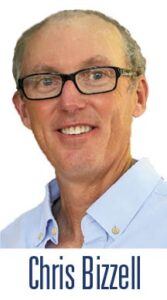 It’s a calm, warm morning, and with each wave, the ebbing tide leaves more sand for beachgoers just starting to set up for the day. It’s the last official Friday of summer, and City Councilman Chris Bizzell is watching the surfers from the pier. From this vantage point, he can see the whole thing come together—the wave forming offshore, building as it gets closer, the surfers snapping into action, paddling, and then, at just the right moment, popping up and harnessing the ocean’s energy. They glide atop the water for as long as they can before it all crashes down. And then they paddle back out and do it again.
We begin our stroll down the pier, and Bizzell stops and points. “Look at that,” he says excitedly. “Have you seen these electric surfboards?”
A guy effortlessly cuts through the water far beyond the breakers, where the other surfers patiently wait in the lineup for the next set. Humberto and Imelda are still a full week away from even becoming a whisper. But there are some nice, small waves—just the kind Bizzell likes. Surfing was a big reason why he moved from Greenville to Folly Beach five years ago. It’s hard to tell if he’s envious of this guy briskly cruising along on his motorized board or if he views this as a form of cheating. Either way, he’s intrigued.
“He’s got a little thing on his wrist so he can adjust the speed,” Bizzell says, explaining the gadget’s mechanics.
The first-term councilmember is the kind of guy who likes to understand how things work. But he’s not here to talk about the newest surfing tech. He’s here this morning to talk about how city government works, and more importantly, how he thinks it can work better for the people of Folly Beach. And why he thinks he’s the best candidate for the job.
When he and his wife, Stacy, first moved to Folly Beach, Bizzell says he had no aspirations of running for public office, let alone being mayor. But over the last five years, he’s come to know and care about the land and the people who live here. Before buying their home on East Hudson Ave. in 2021, the Bizzells and some other couples owned a house together on Isle of Palms.
“We were there for like 20 years. And we probably met like four or five people that entire 20-year period,” he says. “Then one weekend, my wife was like, ‘let’s just go over and see Folly.’ We hung out at Chico Feo. We met Wesley (local author Wesley Moore). All of a sudden, we were talking to everybody at the bar. I was just like, ‘this is a really different spot.’”
By then, the Bizzells’ two children were grown and out of the house, so they decided to relocate permanently to Folly Beach. Years earlier, he had sold his textile chemical business and had entered the internet marketing field. He still owns his company, BizzApps, which offers design, content management, and e-commerce solutions for businesses. It’s a job where he can pick and choose what he wants to work on, allowing him ample time to volunteer and to even serve in public office.
A Dedication to Public Service
“The public office stuff was not even mentioned. You know, it was never on our radar. Getting involved in the community was,” says Bizzell. “So right after we moved, we went to the Civic Club and they needed help with their website, so I ended up building them a website. And then I ended up building the Exchange Club’s website. I also helped with the History Museum’s website.” Bizzell also created a Folly Beach parking app for the City that helps users find, pay for, and manage parking needs on Folly Beach.
In the spirit of full disclosure, Bizzell also assists the Folly Current with managing its live music calendar, the Folly Buzz, online. He previously founded and ran the entertainment app/website iOnGreenville before moving here. Like surfing, music is another passion of Bizzell’s and another reason why he fell in love with Folly.
“[Music] is one of those things I really wanted to plug into because you’ve got some big, big talent out here,” he says, rattling off a short list of some of his favorite local musicians.. “When we promote the music here, we’re also promoting the businesses that are hosting that music.”
Finding Balance is Best
Bizzell says if elected mayor, he’d like to implement quarterly roundtables with business owners and the City.
“We can all sit down and just get a gauge of where we are, where we’re heading, what we’re planning to do, what you guys need, and get everybody pulling in the same direction,” he says. “I think right now there is a little bit of, I wouldn’t say animosity, but it could be a lot better.”
He sees room to improve the balance between the City, the residents, and local businesses. This inevitably leads to talk about Short Term Rentals (STR), which remains a contentious topic despite a voter referendum in 2023 that essentially capped the number of STR licenses at 800. Bizzell ran for City Council later that year and received the second-highest vote total among the eight candidates who were vying for three open seats, only trailing incumbent Katherine Houghton, who is also running for mayor this year.
“You’re never going to make everybody 100 percent happy. I think what we’ve got is about as good and fair a solution as we can get,” says Bizzell. “We’ve addressed the situation with inheritance, which was a big hang-up for a lot of people. I think that kind of moved us a lot closer.”
As far as Bizzell is concerned, the STR issue is settled. The people have spoken and, like it or not, it’s now the law of the land.
“I think a lot of people are ready to just kind of put that aside, just accept that it’s in place and move forward. I’ve heard that a lot this past year,” he says. “So, we need to start looking at these big infrastructure projects and other things like that. I think we’ll be a lot better off.”
Facing Folly’s Challenges
What’s Folly’s biggest challenge if not STRs? Bizzell answers quickly.
“I think our biggest challenge for the foreseeable future is going to be water and flooding and everything that’s associated with that,” he says. “We’ve got septic tanks that are at risk because of rising groundwater. We’ve got floodwater.”
This is one of the reasons Bizzell has pushed for a septic tank mapping project.
“We’re going to map all the tanks, overlay the flood data and the groundwater data, and then we’re putting in a grant with the Municipal Association, hopefully to get like a $100,000 reward on that,” he says. “That would allow us to figure out which septic systems are most vulnerable and then work with the homeowners to be proactive in that respect as opposed to waiting until something happens and then, wow, we’ve got a big problem.”
But one thing that Bizzell has learned since being on council is that the wheels of government move slowly.
“It’s like turning a cruise ship, or whatever the analogy is. You’ve got to kind of take your time. But I think there are reasons for that. You’ve got to take a balanced approach,” he says. “I’ve always been one who works pretty well with other people. You can’t work in isolation. You have to bring in everybody to get to a common solution.”
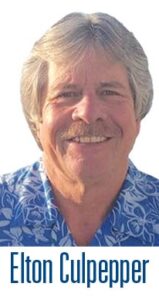 It’s around 3 p.m. when we begin our stroll down the pier. It’s the hottest part of the day, but Elton Culpepper is cool. He looks right at home among the crashing waves, swirling seagulls, and folks fishing in the mid-afternoon on a Monday. He’s wearing one of his trademark Hawaiian shirts. The wind blows his shaggy silver hair back, and when he smiles from underneath a perfect push-broom mustache, it’s evident that he’s living the dream. At 68 years old, he doesn’t need the headache that comes with running for public office. So why is he doing it?
It can’t be for the money. It’s unlikely any of the candidates are doing it for the modest salary that comes with being Mayor of the City of Folly Beach. And it’s not out of any sense of ego or self-promotion. No, Culpepper is doing it now, at this point in his life, because he says it’s the right thing to do.
“I’m running because the City is taking our property rights. It’s just that simple,” he says.
The Elephant in the Room
As an agent for Carolina One Real Estate, it’s not surprising that Culpepper has strong feelings about the Short-Term Rental (STR) cap that was put in place following a voter referendum in 2023. But it’s more than just that.
“The elephant in the room is short-term rentals, which nobody wants to talk about. But they might as well talk about it because that is the elephant in the room. But that’s not the only elephant in the room,” he says. Culpepper’s previous laid-back demeanor shifts to a steely resolve as he stops walking temporarily and starts really leaning into the issues and reasons he’s running. He warns that because we haven’t gotten the number of licenses down to the target 800 yet, we still don’t know the full financial impact the STR cap is going to have on residents, businesses, and ultimately the city, which largely relies on tax dollars from people visiting the island.
“We have a ton of other items, projects in this city that have to be dealt with, too. But when I talk to people, I don’t care what I say about the other ones; it all comes back to what happened with the short-term rentals and what’s happening with some other things.”
One of those “other things” that Culpepper points to is the recent moratorium and proposed ordinance requiring new seawalls to be built 25 feet from the public easement line. He argues that this amounts to a loss of usable beachfront property for homeowners and is another example of the City stripping away the personal property rights of its citizens.
“I don’t live in an HOA. I don’t want to live in an HOA,” says Culpepper, who has owned property on Folly since 1984 and lived on the island since 2005, when he opened, operated, and was co-owner of the Piggly Wiggly just off-island on Folly Road. Before that he operated a Piggly WIggly in Walterboro.
“The thing is, people should have a quality of life, and we will have a quality of life. Yeah, I can promise you that. But we don’t have to pass more laws to have it; we just have to enforce the laws that are here.”
Another move the City has made recently that doesn’t sit well with Culpepper is the proposed Arctic Avenue Safety Improvement Project, which would cost an estimated $7-10 million. Still in the design/planning phases, Culpepper says the narrowing of Arctic Avenue from two lanes down to one simply flunks the commonsense test.
“It will be virtually impossible for a fire truck, EMS, or other emergency services to respond to emergencies on Arctic Avenue with parked vehicles on both sides of the one-lane,” he says. “There would probably be children, beach chairs, car doors open while unpacking to go to and come from the beach.”
Just the day before, there was a carjacking incident on the East Side of the island that escalated into a police chase with the suspect firing shots at public safety officers before being apprehended.
“If an emergency like that had happened on a one-lane Arctic Avenue, the outcome could have been disastrous in so many ways. Can you imagine a high-speed chase with one lane and people and parked cars on both sides of the road?”
A Promise to the Parks
Another top item on Culpepper’s punch list is what he sees as the degradation of our city parks.
“These city parks, I don’t know if you’ve been to these city parks lately, but they’re deplorable. This one down here off of Cooper, the swings have had caution tape on them for months now. I mean, months. You can’t go over there and sit on any bench. The picnic tables are just about half in the ground. The equipment doesn’t even work,” he says. “I can tell you one thing: we’re going to fix these city parks because we’re not treating the children well at all. We act like we are, but we’re not. I take my grandchildren to them, so I know what’s going on.”
Something else that gets Culpepper fired up is the current council’s use of “executive session,” a behind-closed-door discussion on a topic during a public meeting.
“It’s not every meeting, but you can look at the numbers; about 80 percent of the meetings have an executive session. They come in there, they go into executive session, come back and say ‘no votes were taken.’ Whatever, whatever, whatever. And they all come out, and it’s 7-0 every time. No votes were taken? No actions taken. And come out, it’s 7-0,” he says. “It used to not be like that. It’s not going to be like that. That is not the way this government should operate. We should have a healthy debate. That’s what it’s for. You do it in public. You don’t do it in executive sessions, and come out and tell people no votes were taken.”
A Return to Public Office
To the untrained eye, Culpepper may seem like the newcomer to the Folly Beach political theatre. He’s the only one of the five candidates who hasn’t either served on Folly Beach City Council or at least run for City Council in the past. But he’s no newcomer to politics, not by a long shot. Culpepper was once the youngest mayor in the nation.
In 1977, he made history when he was elected Mayor of Walterboro at just 20 years old. Culpepper served his hometown in that capacity for 12 years. So, it’s safe to say, he knows what it takes to run a city, from budgeting to balancing infrastructure projects to bringing a community together. Not to mention, Culpepper is a familiar face at council meetings, speaking up whenever he feels there’s an injustice. And lately, he says there has been a lot of injustices. This is why, nearly five decades later, the former whiz kid mayor is dusting off his political cap and jumping back into the arena.
“This island is split 50/50 anyway you want to look at it. We had what happened two years ago (STR Cap), and all of us had good neighbors, good friends, and now people don’t speak to each other,” he says. “And I feel like somebody’s got to try to put this back together. If I can’t do it, I don’t know who can.”
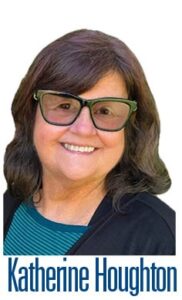 The sun is just starting to make its nightly retreat behind the island, causing the pier to cast long shadows across the late afternoon beachgoers, sunburned and still warm from the day. Dr. Katherine Houghton is at the top of the pier, waiting at a blue picnic table, her hands folded in front of her. She’s early, of course. No telling how long she’s been here. But she’s here and she’s ready.
If you’ve ever spoken to the second-term City Councilmember before, you probably know she’s always ready. In her five years on council, it’s hard to think of a time when Houghton was unprepared, hadn’t read the material, or didn’t weigh all sides to an issue before casting her vote. In other words, she does her homework. This is appropriate, considering that she holds multiple advanced degrees and has worked in higher education for most of her professional life, even serving as a university/college dean in the United States and abroad in her former career.
Unsurprisingly, Houghton equates her mayoral run to graduating to the next stage of life, whatever that might be.
“I’m always on an academic cycle. It’s my nature,” she says, laughing. “And so now I’m at the doctorate level, ready to either step up or challenge myself in a different way, intellectually as well as a commitment.”
That’s not to say that this was a natural or easy choice to run for the city’s top spot.
“I did a lot of reflecting on the sacrifice that it would be, and the rewards far outweighed the challenges,” says Houghton, recalling attending a Folly Association of Business (FAB) meeting several months back when two of her opponents announced their intentions to run for mayor. A third candidate announced shortly after that. And while her friends and supporters were encouraging her to do it, she still needed to make sure it was the right thing for her and for the island. She needed to do more research. More homework.
“I didn’t seriously consider it early on because I still had more soul-searching to do. I wanted to go to the doctors. I had a list of things that I needed to know: body, mind, spirit, that I could step up and hit it out of the ballpark. I had to be in a position of strength,” she says.
Part of that soul-searching involved a summer road trip. She loaded up her Bronco and headed across the country, returning to college campuses where she worked as a dean and talking to colleagues whom she respected. She also talked to family members, including her sister, who encouraged her to run.
Houghton said her sister also said, “I know you, and if you didn’t try, you’re going to regret it.”
So, by the time Houghton’s Bronco crossed the Folly River and she was back on the island, she knew what she was going to do. Houghton doesn’t seem too concerned about losing. She still has a job to do regardless. She was re-elected to City Council in 2023, garnering more votes than the other seven candidates vying for the three open seats. Win or lose this election, she says she will continue to work hard for the city that she loves.
What Keeps Her Up at Night?
“Okay, so what keeps me up at night? The first thing is crisis preparation—that named storm, the potential for a delayed FEMA response, and lack of it, is something that’s more real than ever. It’s extremely, extremely real to me. So that’s something that keeps me up at night for sure,” says Houghton, who has dealt with crises on college campuses and faced storms while working on floating classrooms at sea.
“That’s the reason why I feel that I can literally stand up in a storm, because I have done so before. I’ve been in monsoons in Hong Kong. I understand risk management,” says Houghton, who had to deal with the COVID crisis just months after being elected to her first term on City Council.
While it’s not a natural disaster or a global pandemic, another storm that Houghton has endured during her tenure on council is the Short Term Rental cap that came about following a voter referendum in 2023. The issue tore the island apart, nearly splitting it down the middle. There is still festering resentment and animosity as a result.
“It breaks my heart,” says Houghton about how the issue has divided the community she has called home for the last 15 years. Fitting for a candidate whose campaign slogan is “For the Love of Folly.”
Considering All Angles
“One of my skill sets is consensus building, outreach, and learning from all sides,” says Houghton
She believes there’s never one way to solve a problem and to take a hard this-or-that stance on any issue is a recipe for disaster. She says you to consider things from all angles and look at them globally and holistically.
“You define the problem, and you go through a process. But there’s never one way to solve it,” she says, using the STR situation as an example. “When I look back at that evolution, frankly, my vote in 2021 was for a six-month moratorium (on issuing new STR licenses). That was my vote. I wanted to bring people together. In my world, that’s what we would have done in Higher Ed.”
Houghton lost the vote for a moratorium, something she still wishes had been handled differently by council. She feels it would have allowed time to consult experts who could have looked at it objectively and offered their advice and recommendations.
“There are experts in the field. Just like everything else. Do you think that we know about stormwater management? No, we bring in an expert, like we have been very willing to do. We bring in Dr. [Nicole] Elko. Perfect. There are consultants who are extremely experienced but also don’t have any skin in the game. That was one of my wishes in the midst of the moratorium. Yes, to get time. Yes, to do that. When you don’t have that, this is kind of the way you end up,” she says.
“So, when that happens, democracy kicks in. And if the council cannot do that process—public hearings, whatever—then the citizens have every right to what they need to do. And they did,” she says. “My job now is to help people live with it.”
Living in a Fishbowl
Houghton laments the rift the STR issue has created on Folly. She says there are residents and business owners who are afraid to put political signs in their yard out of fear of retribution, either on social media or in real life. Houghton says it won’t stop her from fighting for all the people of Folly Beach, even if it causes some stress in her personal life. Something else a life as a college administrator conditioned her for. Plus, she’s tougher than she looks. She grew up in Stoneham, Mass., about nine miles north of Boston.
“Yeah, I’m used to not taking things personally,” says Houghton. “I’m used to being in a fishbowl. I’m used to conflict. And the island, it’s a fishbowl.”
Much of who Katherine Houghton is comes from where she’s from and how she grew up, but she says it’s where she’s been that makes her an effective leader.
“I have circumnavigated the world twice at sea. A semester at sea voyage with 650 students, faculty, staff, and crew members. I was responsible for them, and we’re talking terrorism in Egypt, tsunamis, El Nino swells,” says Houghton. “My extensive travel prepares me to pretty much work with anyone and to deal with most situations because people’s mortality actually depended on me. That’s a responsibility, for sure.”
 Running for public office is not for the thin-skinned or faint of heart. Ann Peets is neither of those things. This is obvious in the way she confidently strides up the steps of the pier onto its wooden planks with the swagger of a CEO entering a boardroom. It comes naturally for Peets, which shouldn’t be shocking, considering she’s climbed to the high rungs of the corporate ladder in her professional career, something she’s banking on to bolster her bid for mayor.
Still, it was a welcomed surprise to be met with a kind greeting and an easy smile instead of the harsher image often painted on social media by those who blame Peets for Folly’s Short-Term Rental (STR) cap. More than any other mayoral candidate, Peets has been a lightning rod for online criticism, fueled by her unwavering support for the cap and helping push through the referendum, which passed by only 78 votes back in February 2023. While effectively capping STR licenses at 800, the issue nearly tore our normally congenial island in two.
“Some people don’t want to let it go, unfortunately. At the end of the day, there was a referendum that everybody voted on, and the citizens themselves decided to put the cap in place,” says Peets, who’s originally from Springtown, NJ, but has called Folly home for more than a decade. “They need a scapegoat person to be upset at. So, I seem to take the brunt of it. I’m okay. I got big shoulders. It’s okay.”
Rolling with the Punches
Peets counters criticism head-on, insisting the cap has improved the quality of life for Folly residents and hasn’t had a negative impact on their property values. Pointing to Charleston Trident Association of Realtors (CTAR) data, she says home values have actually risen 40 percent overall—a figure her opponents flatly reject, coming up with alternative stats that suggest the contrary. The personal attacks on Peets haven’t let up either and likely won’t as the election inches nearer.
“I’ll take the personal attacks. I have a thick skin. I don’t know why you have to sit there and cut someone down personally. You can say, ‘you know what, I disagree with your views and here’s why.’ And that’s great,” says Peets. “But could you just disagree with the person without the bullying? I think that’s kind of childish.”
Moving past all the online noise and the lingering STR unrest, Peets sees plenty of other issues that need to be addressed at the City level. This is why she’s more motivated than ever to run for public office again. In 2023, she ran for City Council, landing in a runoff with incumbent Billy Grooms and losing narrowly by just 78 votes. Ironically, it was the exact same num-ber of votes that the referendum had passed by months earlier. Like the social media attacks, Peets took the loss in stride and is using the lessons learned from that campaign for what she hopes to be a successful run at the mayor’s gavel.
Why is she Running?
As we walk toward the end of the pier, without breaking stride, Peets methodically and efficiently lays out her three reasons why she’s running for mayor now:
The first is that she follows City Council closely and, from her last campaign, knows what challenges the city will face in the next four years and beyond.
“I go to every city council meeting, and I’m tight with the issues,” says Peets. “So, I see how to build and layer upon what’s going on now to take it to the next level.”
Secondly, Peets says it’s the perfect time in her life personally. She’s had a successful corporate career working with pharmaceutical and medical device companies. It’s kept her busy, often traveling while also being a mother. Now, her son is 27 and on his own. And even though she still owns a local medical clinic business, she has more time than ever to devote to public service.
“I own it, and I have employees, so I need to be there just to kind of check in and open the door,” explains Peets. “So that’s why I have the time to dedicate to this position.”
The third reason, according to Peets, is simple: Experience.
“I have the experience. I look at it like a CEO position, even though it’s a small city, it’s really a CEO position, dealing with the state, dealing with federal, making sure the issues are covered. And I’ve been a general manager for 30 years, and I’ve been a vice president for 12 years. So, I feel like it’s almost like a lateral move, but in a city that I love,” she says.
Building on a Solid Foundation
When making her decision to run, Peets says she met with Mayor Tim Goodwin and spoke with former Mayor Richard Beck just to get a feel for what the job truly entails.
“I feel like I’ve been through the trenches in this corporate atmosphere. You really have some horrible stuff happen, you know … So there are crisis situations that you have to handle, so I think I can step into it,” says Peets. “And the staff is very, very smart, and they work together as a team. I think if I basically take that to the next level and empower them some more, I think they can even be better.”
Peets sees herself as a results-oriented leader and says the present city leadership has laid a good foundation on which to build a stronger Folly Beach.
“I think we are leading the state in terms of environmental protection. Tim [Goodwin] and all the city council have done a wonderful job with that,” says Peets. “I think we are very strong in terms of supporting our businesses. I do think there is an opportunity for growth in meeting residents’ needs and communications.”
“Obviously, we need to keep the beach renourishment going. That’s set up, and Tim has done a wonderful job working to make sure that happens, says Peets, who lists flooding as an area of concern.
“I think there’s still a resident issue in certain areas around the flooding. Yes, the infra-structure is going to fix a lot of that. But wherever it’s not, we need a quick fix,” she says. “We’ve got people who some of them couldn’t get out of their house for two or three days. That’s really unacceptable. That’s not a good situation. So I’m worried about things like that.”
It’s this kind of concern, especially during emergencies, that Peets believes everybody on the island shares. And while there is still resentment and anger stewing over the STR debate, she hopes that the island will continue to support and respect each other.
“We’ve disagreed on things here and there. But the neighbors are so wonderful. We all pitch in. Not just at the hurricane time. We pitch in and help each other as we travel and work together,” she says. “And yeah, there are people on opposite sides of the political fence. And still, I think … the good people of Folly are just so positive. I like the eclectic mix of people. I don’t mind the people stirring up ideas. I wish they’d all be more open to come in and say, Let’s all discuss ideas and not be upset with people. That’s how I see it. I see it working more as a working team.”
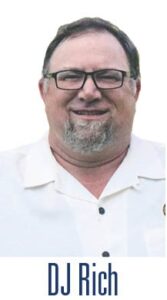 After exchanging a quick greeting and some good-hearted ribbing over college football allegiances, City Councilmember DJ Rich is on the move. He’s got places to be, things to do. Later today, DHEC is dropping by for a routine inspection of Planet Follywood, the popular restaurant and bar Rich and his grandmother have owned for more than 20 years. But that’s later. He’s in political mode right now. He’s dealing with campaign marketing. He just approved his “DJ Rich for Mayor” ad for this paper and ordered his yard signs. He’s got to get them to his supporters. He’s got hands to shake and babies to kiss. But first, he has to walk down to the end of the pier and back while talking to the local news rag about why he’s running for mayor, and more importantly, why he thinks he’s the best person for the job.
It’s noon on the nose when we take our first steps towards the Atlantic Ocean. It’s a perfectly sunny 75 degrees on a Monday in late September. It’s the first official day of fall. But, for Rich, this day holds significance for another reason. It’s the anniversary of a day when the weather wasn’t as favorable. It’s 36 years to the day when Hurricane Hugo made landfall.
“There aren’t too many people around who remember that,” Rich says. “That’s devastation. That’s what (the City of Folly Beach) has been storing money away for. That’s why we don’t spend all our money every year on projects. We have to put money in reserve accounts because we have to have enough to run for a year without income if a storm like that comes around. I’ve seen it personally.”
Rich’s grandfather lived on Front Beach at the time Hugo plowed into the South Carolina coast. He recalls coming out the next day with his family, taking pictures, and trying to rescue as much as they could.
“It’s a hell of a sight to see. I don’t wish it on anyone. But it happens. We have to be ready for it,” says Rich. “Even for things less than Hugo. I’ve dealt with this as a business owner with big storms that have taken power out … or snow. Snowmageddon was my favorite. But with all of these storms, you have to know what to do. You have to pay attention to the weather. You have to work with your neighboring municipalities and the (South Carolina) Emergency Weather Division. You have to prepare your residents. We have a great plan in place for the City.”
On council, Rich has worked closely on the City’s emergency preparedness plan. He has seen plenty of storms come and go in that time. He was on council during the COVID pandemic. But it’s not just about preparation, according to Rich. It’s also about what happens in the wake of a major disaster.
“It’s not so much beforehand. It’s after,” he says. “We can’t sit around and wait for Charleston County to come out and clear roadways. So, we do it ourselves.”
A Vital Part of the Community
Rich is proud that, besides the work he’s done with the City to prepare for a hurricane or other natural disaster, Planet Follywood has always served as a de facto community gathering place after a storm … and sometimes during (there have been some legendary hurricane parties held at the bar).
“It’s where a lot of people come to meet up,” says Rich. “We’ve always used that as a meeting place for storms and just for people to check on each other in the community and get some help.”
Rich admits that while running a very visible restaurant and bar on Center Street could benefit his campaign in many ways, he’s also been criticized for it at times.
“Having those business connections helps me get people to work together. I feel like my relationship with the business community is an asset. But I’ve taken knocks for that over the years because people think it’s business first, resident second. But I live here, too,” says Rich. “I’ve lived here longer than I’ve been a business owner. I was basically raised out here. As a kid, I hung out with my grandparents all the time. I went to Nativity (Catholic School). When they picked me up, I was out here hanging out in the Atlantic House every day.”
There is No Learning Curve
It’s not just his roots or his family’s history on the island that make Rich believe he’s the right choice for mayor. He’s been preparing for this role for years. A full-time resident of Folly Beach for more than two decades, Rich has spent 14 of those years on City Council, including the last four as Mayor Pro Tempore.
“There’s no learning curve with me. There’s no drop off. I’ve been working on this for a long time, just gaining the knowledge and the information. Since I’ve been Mayor Pro Tem the last four years, Tim (Goodwin) has done a great job of showing me his side of things, his budget. I’ve run staff meetings. I’ve run city council meetings. I’m ready to take that next step,” says Rich.
As we near the far end of the pier, there’s a fisherman in a fight with something large. As he’s reeling it in, his buddy lowers the drop net. Rich stops stumping for a moment and watches the angler bring a large redfish up to the rail. The guy says it’s the seventh large bull they’ve caught today. Rich jokes that this is a good omen. We start the walk back toward the shore, moving even quicker than we did on the way here.
Ordinances are Living Documents
On the stroll back, Rich touches on the controversial STR cap, which, despite being the law of the land, still has many residents seeing red.
“When the referendum came through, no matter what side you’re on, it was a citizen-led referendum. Yes, we worked with it. We spent a year making amendments and trying to make it more favorable for everybody,” he says. “It was about keeping our sense of community and not just becoming a private investor island.”
That being said, Rich notes that every City ordinance is a living document, which means there’s always room to amend and adjust.
“We are constantly evaluating every ordinance that we have, and we usually tinker with every ordinance that we have. If not every year, every couple of years, because things change. You have to seal loopholes. You have to tighten things up for licensing. The process might change. You might want to make it more efficient. Whatever the case may be, you’re constantly looking at all ordinances,” says Rich, who has dealt with hundreds of amendments to countless ordinances over the years.
He believes this extensive experience on council sets him apart from his opponents, even those who have served with him over the last several years.
Of the three City Council members running for mayor, Rich is the only one whose term is up this cycle, which means that if the results don’t go his way, he’s out of city politics … at least for the moment. And while that’s not what he wants, he says he’d be at peace with it.
“Yeah, if I lose, I’ll be OK with it because I’ve been doing this for a long time. Yes, I am ready to take the next step. I feel that I’ve learned enough,” says Rich. “But if not—if that’s not in the will of the voters—yeah, that’s fine,” he says, joking that it would give him more time to do the things he loves, like playing golf, hunting alligators, and fishing.
City Council Candidates
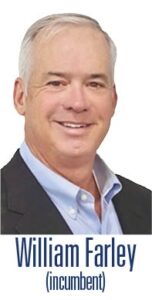 FOLLY CURRENT: What is your professional background? (Including any previous elected positions)
WILLIAM FARLEY: I enjoyed a 30-year career with the Gaston County (NC) Police Department, serving my last 10 years as Chief of Police. In that role, I led 250 employees across the Police Department, Consolidated 911 Communications Center, and Animal Control services. Gaston County, adjacent to Charlotte/Mecklenburg, is the 10th most populous county in North Carolina, and I managed a combined $14 million budget.
In 2011, I worked with the Gaston County School System, leading a community-focused process to redistrict county high schools to accommodate the newly constructed Stuart Cramer High School. A previous redistricting effort at another school years earlier had ended in division and even picketing at school board meetings. The process I led, however, was collaborative, controversy-free, and unanimously approved by both the school board and the community.
I also completed real estate training and became a licensed agent in North Carolina in 2015, using that license primarily for immediate family transactions. Since 2018, I have served as a Folly Beach City Council member.
FC: How long have you lived on Folly, and what gives you the expertise to have a say in community issues?
WF: I have lived on Folly Beach since 2016. My professional career has been rooted in public service, leadership, and problem-solving. I hold a Master’s in Public Administration, am a trained mediator in the State of North Carolina, and completed the Advanced Municipal Elected Officials Institute through the Municipal Association of South Carolina. These experiences, along with my service on Council, provide me with the skills to address complex community issues thoughtfully and effectively.
Why did you decide to run for re-election?
WF: I have always been deeply involved in the communities where I’ve lived. I prefer being an active participant rather than a spectator. Shortly after moving to Folly, I began serving on Beach Patrol, then later on City Council. I believe my unique combination of skills and experiences makes me a strong, collaborative team member, and I want to continue using those abilities to serve Folly Beach.
FC: What is something that most voters don’t know about your professional/personal background that makes you the right candidate for the job?
WF: I am a graduate of the FBI National Academy (180th Session, 1995), one of the nation’s most respected law enforcement leadership programs. Fewer than 2% of law enforcement leaders in the United States have completed this training. This experience sharpened my leadership and problem-solving skills and deepened my commitment to public service.
FC: What do you feel are the most important issues facing Folly right now?
WF: Infrastructure remains at the top of our challenges. Beach preservation and renourishment, pedestrian safety, and drainage improvements are critical issues that must be addressed with persistence and planning. While progress has been made, much work remains.
Equally important is healing from the divisive debate over the short-term rental cap. City Council has listened to residents and adopted significant modifications to address concerns, including provisions for inheritance, limited rentals for residents, and hardship allowances. These adjustments have refined the cap that voters approved, but true healing will take time.
I have experience guiding communities through difficult issues. In 2011, while working with the Gaston County School System, I led the redistricting process for Stuart Cramer High School. A prior redistricting effort at another school had ended in division and even picketing at school board meetings. In contrast, the process I led was collaborative, controversy-free, and unanimously approved by both the school board and the community. That experience reinforced my belief that with transparency, dialogue, and respect, even contentious issues can be resolved in a way that brings people together. I will bring that same approach to Folly as we continue to move forward together.
FC: If re-elected, what would you make a priority on day one?
WF: With a new mayor and at least one new council member taking office, my first priority will be building strong relationships with them. A spirit of teamwork and collaboration is essential to the success of City Council, and I will work immediately to ensure we start on the right path together.
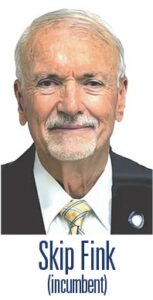 FOLLY CURRENT: What is your professional background? (Including any previous elected positions)
SKIP FINK: Educational Foundations: I hold a Bachelor’s degree in Political Science/Pre-Law from the University of Florida, a Master of Public Administration (MPA) from Auburn University, and a graduate degree in National Security Strategy from the Marine Corps University.
Military Service: I served 25 years of continuous active duty in the U.S. Marine Corps, retiring as a Colonel. My career included combat tours in Vietnam and the Gulf War, command roles at every appropriate rank, high-level NATO staff service in Belgium, and academic leadership as Dean of Academics at the Marine Corps Command & Staff College. I lived and served in four countries and seven U.S. states.
Post-Military Career: After retiring from the military, I held several leadership roles, including State Coordinator for Military Affairs in South Carolina, Director of Government Business at US Filter Corp, and President of a systems engineering firm in the defense sector. I also co-owned a Native American Tribal company serving the federal government. I’ve remained active in community service—serving on the Board of the Warrior Surf Foundation, as vice-chair of a local HOA, and in multiple church leadership roles. I’m a 35-year member of Rotary International and a seven-time Paul Harris Fellow, reflecting a lifelong commitment to service.
FC: How long have you lived on Folly, and what gives you the expertise to have a say in community issues?
SF: My wife, Sam, and I have lived on Folly Beach since July 2013. I currently serve on City Council and previously spent nine years on the City Design Review Board, including three years as Chairman. On Council, I’ve been actively involved in annual budget planning and supporting major projects such as the Transportation and Traffic Safety Action Plan, Marshfront Management Plan, East Arctic Avenue improvements, Beach Preservation Plan, and the Center Street Stormwater Drainage Project. I’ve also completed training in municipal governance through the Municipal Association of South Carolina and remain actively involved in several community organizations.
FC: Why did you decide to run for re-election?
SF: I’ve always considered Folly Beach to be our permanent home in retirement, and I’m deeply committed to protecting its future. Strong governance is essential to a thriving, balanced community—ensuring fiscal responsibility, sustainable infrastructure, public safety, vibrant businesses, environmental stewardship, and a high quality of life and livability for residents. With my leadership and management experience, I’m committed to helping Folly maintain its ‘funky’ identity and navigate future challenges with balance and foresight.
FC: What is something that most voters don’t know about your professional/personal background that makes you the right candidate for the job?
SF: Personal character, integrity, and civility have always guided my life. I was raised in a “Greatest Generation” household as the only son of a career military officer, WWII/Korean War fighter pilot, college athlete, and U.S. Olympian.
From an early age, I was taught timeless values: “do it right or do it over,” and “always respect your elders—especially teachers, police officers, and your mother!” I live by those principles today and will continue to bring them to my work on City Council.
FC: What do you feel are the most important issues facing Folly right now?
SF: Keeping Folly a balanced, livable community is my top priority. That means supporting a sustainable city government, responsible fiscal planning, a strong resident base, and thriving local businesses—while ensuring Folly remains a tourist destination, NOT a tourist resort. Public safety, especially for pedestrians and cyclists, remains vital, as well as addressing traffic, parking, and protecting our beach and marshes. Supporting our senior residents and families is, and will continue to be, a key focus for me.
FC: If re-elected, what would you make a priority on day one?
SF: My first priority will be to build a positive relationship with the new Mayor, Council, and city staff. Collaboration is a critical part of governing. Listening to all perspectives before taking action; listening to the constituency and keeping feedback communication lines open and transparent. I will continue to practice my six “C’s” of being a responsible civil servant: Competence, Character, Common Sense. Collaboration, Community, and CIVILITY! I’m committed to advancing our vibrant, balanced, and inclusive “Edge of America” community for all who call it home, work, or visit. Thank you!
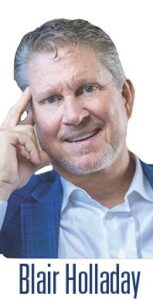 FOLLY CURRENT: What is your professional background? (Including any previous elected positions)
BLAIR HOLLADAY: I am a graduate of the College of Charleston, Medical University of South Carolina (MUSC), The Ohio State University, and the Massachusetts Institute of Technology (MIT) with an Executive Leadership degree. I served as a Full Professor at MUSC for 16 years before becoming the Vice President for Scientific Activities of the American Society for Clinical Pathology (ASCP) for five years and subsequently the Chief Executive Officer (CEO) for 15 years. The ASCP is a significant organization with a large staff and over 100,000 members worldwide. As CEO, I also had oversight of multi-million dollar budgets.
After 40 years serving as a leader in healthcare at the national and international levels, I retired in 2025. Throughout my career, I have also served on various medical boards and non-profit organizations. I have also worked with world leaders, including many Presidents and First Ladies, to develop national and global policies to address healthcare disparities worldwide. Notably, I worked with the Obama Administration’s Office of Science and Technology Policy to bring access to cancer diagnostics from the U.S. to patients throughout sub-Saharan Africa.
FC: How long have you lived on Folly, and what gives you the expertise to have a say in community issues?
BH: I have been a resident of South Carolina and Charleston for 40 years, including spending family vacations here. I have rented at Folly Beach for over three decades. In 2022-2023, I decided to purchase my primary residence at E Arctic in Folly Beach. I have personally witnessed the discriminatory patterns and their impact on owners post-implementation of the radical change in policy related to STRs. The current STR cap has significantly affected the long-term real estate planning of residents, second homeowners, those seeking affordable housing and visitors alike. The scarcity of rental units due to the STR cap has made it difficult for many to afford renting.
FC: Why did you decide to run for the council?
BH: I decided to run for council because someone needs to step up and advocate for full and equitable property rights for all Folly owners. I believe in reinstating fair and flexible STR policies that reflect the diverse makeup of our community, including working families, hospitality professionals, long-time locals, and new residents who all contribute to the Folly spirit.
FC: What is something that most voters don’t know about your professional/personal background that makes you the right candidate for the job?
BH: One aspect of my background that most voters may not know is my experience in high-level negotiations with national and international leaders. These successes have been driven by empathy and fairness and as a champion for the working person. I believe in cooperation over conflict and have been a lifelong advocate for community balance. As a property owner and someone with deep family roots in the area, I am passionate about preserving the vibrant and eclectic character of Folly while championing the rights of its residents. My campaign is focused on implementing common-sense solutions that reflect the needs of all who call Folly home, regardless of their length of residence.
FC: What do you feel are the most important issues facing Folly right now?
BH: The most important issues facing Folly right now include the STR cap, affordable housing, and preserving the community’s unique character. I am committed to working with all stakeholders to find solutions that benefit everyone in the community.
1. Restore Property Rights: I strongly support short-term rentals (STRs) and oppose the current STR cap. I believe the cap is both unfair and ultimately detrimental to both property values and community equity. Folly Beach is distinct from Sullivan’s Island or other restrictive municipalities. Our policies should reflect our unique nature.
2. Drainage & Flood Mitigation: Flooding is a pressing and escalating issue. I am committed to identifying effective, infrastructure-based solutions to address our drainage problems island-wide and safeguard homes, roads, and businesses.
3. Pedestrian Access & Safety: Our beach access roads require sidewalks and improved pedestrian infrastructure. I support initiatives that prioritize walkability, safety, and accessibility for all residents and visitors.
4. Sensible Parking Solutions: Instead of privatization and increased ticketing, I will advocate for practical, resident-centric parking policies that support both locals and tourism-based businesses.
FC: If elected, what would be your top priority on the first day?
BH: Initiate a rapid-track process to negotiate the end to the short-term rental (STR) cap. The STR cap has already shown a negative impact on our housing market. With over 70 active listings and rising cumulative days on market, Folly Beach is seeing declining demand and suppressed values. This inequitable STR cap has divided our community, made it harder for families to keep generational homes, and stripped future residents of their rights. For those that originally voted for the STR cap, the original reasons given for imposing the cap by its supporters has proven to be wrong, such as increased property values and fewer nuisance violations (noise/public intoxication).
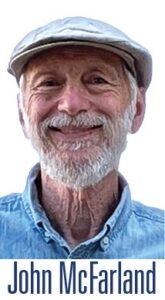 FOLLY CURRENT: What is your professional background? (Including any previous elected positions)
JOHN MCFARLAND: I was a high school biology teacher. I also taught AP Biology and ninth grade science. If elected, this would be my first elected position.
FC: How long have you lived on Folly and what gives you the expertise to have a say in community issues?
JM: I moved to Folly Beach this summer specifically to run for City Council. Prior to that, I lived in West Ashley for 32 years.
I’ve been attending council meetings since 1995.
My wife and I have owned four long-term rentals for almost 30 years.
I founded Save Folly’s Future in 2021 to lobby the City Council for Short Term Rental limits.
After the Mayor’s ordinance to cap STRs was killed I wrote a petition with similar goals. Four hundred fifty-six petition signatures were collected in five weeks, making the Citizen’s Referendum possible.
I campaigned vigorously for a YES vote on the Citizen’s Referendum. On Feb. 7, 2023 the Citizen’s Referendum passed and “The Cap” became law.
During the last four years I have attended most council work sessions and meetings.
I am a member of three Folly Beach Clubs.
I have watched how city government functions for years, which is why I have the knowledge and expertise to be an effective City Council member.
FC: Why did you decide to run for council?
JM: I am running for City Council to safeguard THE CAP. After decades of public service, Mayor Goodwin will not be here to manage the City or to protect THE CAP. Now it’s up to a majority of council members to safeguard THE CAP and work with the new mayor to continue moving Folly forward. I’d like to be part of that effort.
FC: What is something that most voters don’t know about your professional/personal background that makes you the right candidate for the job?
JM: I can’t think of one particular thing that has prepared me to be a council member more than any other.
I am an amalgam of years of knowledge and experiences that have contributed to who and what I am today.
I would argue that my supporters already know why I am the right candidate for the job.
1. I have no hidden agenda nor will I use my council position for personal gain.
2. I’m just a person that wants to make Folly a better community than it already is.
3. I am willing to take a good idea, defend it and work to make it a reality.
4. If elected, this community will get a hard working and dedicated City Council member.
FC: What do you feel are the most important issues facing Folly right now?
JM: Keeping THE CAP is paramount. If the STR dragon is unleashed it will destroy the community, one lot at a time. Today’s important issues: flooding, speeding, sidewalks, noise and all those quality of life improvements I’d like to work on would be for naught, if THE CAP is undone.
FC: If elected/re-elected, what would be your priority on day one?
JM: The first thing I would do as a councilman is to begin making city government more responsive to its citizens:
1. I’d advocate for a suggestion box in City Hall and another one on-line.
2. I’d change the Council Meeting “Public Comment” policy to allow any topic to be discussed and not just agenda items. (Just like it was before the STR saga.)
3. I’d announce that my office hours for December will be nine to five on Dec. 15.
After that, I’d improve the City’s beach access points. In addition, I’d also work with other members of City Council to deal with the City’s many challenges:
1. Environmental (Flooding and septic)
2. Safety (More sidewalks and speed limit enforcement)
3. Quality of Life (From Beach Access to Noise and so much more.)
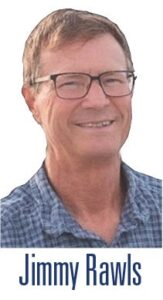 FOLLY CURRENT: What is your professional background? (Including any previous elected positions)
JAMES RAWLES: I can profess to be many things, but cannot say I have ever been elected to any political position. Hopefully, this will be another first for me. I earned an MD behind my name, but that was not really my goal when I almost failed out of high school. My test scores were fine and my SAT was great, but the call of the ocean impacted my attendance.
I am not sure Folly voters really care too much about what other people would call “professional background”…We care more about breadth of experience, character, and an ability to look at the big picture and make the right decisions. With that in mind, here are a few of the many things I have done that I am proud of:
In High School, I built docks and retention walls working for an ex-Marine who became a second father to me. I have always kept those skills as a backup plan in case my professional life fell apart. When we moved to Folly in 1999, I modified a 1968 military surplus landing craft (LCVP) into a pile driver and built my own dock plus two others.
While at Wofford College in Spartanburg, SC (my parents sent me there to get me away from the ocean), I did not join a fraternity despite the fact that 80 percent of the student body belonged to one. Instead, I resurrected the dormant White Water Club into a very active entity. Membership grew and included folks from all facets of the student body as well as faculty.
After getting my MD from MUSC and luckily getting into and through the very competitive anesthesiology residency, I worked at East Cooper Hospital for 11 years. During that time, I became CEO of my group and simultaneously served as Chief of Surgery. It was a tumultuous time in that hospital. I helped create an OR Committee that became a method for communication amongst different factions, as well as solved some of the OR efficiency problems that had plagued the system for years.
Real Estate Investing has been and remains an important part of my life. Darlene and I have been very successful buying properties, doing renovations, renting them out and then selling them at the right time. We currently own two short term rentals, but neither are on Folly.
FC: How long have you lived on Folly, and what gives you the expertise to have a say in community issues?
JR: We bought a lot on Folly in 1998, Gary Brown built our house that we designed and we moved into in 1999. We have lived in our home for 26 consecutive years as full time residents. We have been witness to and participated in Folly’s infamously colorful politics (Sewer Wars, Alcohol Ban, the Cap, etc). I understand the things that divide us. I understand the things we have in common. I understand how to listen. I have enough common sense and compassion to assimilate all that into workable solutions.
FC: Why did you decide to run for council?
JR: We on Folly are divided—or at least we think so because there are two factions that tell us we are….a reflection of our National culture. It is time to heal. I know I can help.
FC: What is something that most voters don’t know about your professional/personal background that makes you the right candidate for the job?
JR: I am not a one trick pony. I have been and done a wide variety of things in my life. I instinctively think ”outside the box” and look for practical solutions to complex problems—and I succeed. I am not beholden to any group and will make decisions on my own.
FC: What do you feel are the most important issues facing Folly right now?
JR: We live on the Edge of America—an eroding barrier island that used to be the dirty step child of Charleston culture. Now we have been rapidly accelerated into a high stakes real estate game because of Charleston’s explosion in popularity. There are a lot of big money bets on the table. We are an increasingly urban beach town with no real “off” season anymore. Thankfully our City government has matured to meet this challenge with wise leadership and the correct decisions on tough and divisive issues (Thank you Tim Goodwin and Council). Going forward we need to focus on resident livability and visitor enjoyment, traffic improvement, walkability, pedestrian/bike safety, functional and reasonable STR ordinances/enforcement with a focus on long term residents and owners. Last but not least: without a long term plan for “re-nourishment” of our beaches and prevention of seaward home construction, all is lost.
FC: If elected/re-elected, what would make a priority on day one?
JR: Firstly I would get acquainted with all the “levers and switches” of municipal government that I have been availed, then I would get to know my fellow council members and the new Mayor. I would begin to look for solutions to the issues mentioned above with a main focus on livability and walkability.
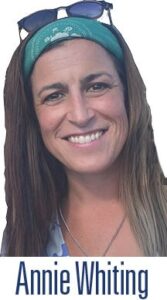 FOLLY CURRENT: What is your professional background? (Including any previous elected positions)
ANNIE WHITING: I am a construction project manager with experience leading complex projects from concept through completion. I’ve worked for general contractors managing job sites and schedules, and I’ve also served as an Owner’s Representative for two of the Big Tech companies, where I oversaw multi-million-dollar campus planning and infrastructure projects. My responsibilities have included budg-eting, vendor management, risk mitigation, and ensuring that projects were delivered on time and to standard. These skills directly align with the challenges Folly is facing as it undertakes more than $17 million in capital improvements. This is my first time running for office, and I am eager to bring a fresh perspective and technical expertise to City Council.
FC: How long have you lived on Folly and what gives you the expertise to have a say in community issues?
AW: I moved to Folly Beach in February 2025, but I’ve lived in Charleston long enough to see how other nearby beaches have evolved into primarily tourist hubs, often leaving long-term residents with less of a voice. That experience gives me perspective on the importance of protecting Folly’s unique character while planning responsibly for the future. My expertise comes from my professional background in project management, where I’ve had to balance competing priorities, budgets, and stakeholders to reach outcomes that serve the greater good. Folly needs leaders who not only love the lifestyle of surf, music, and family, but who also understand how to make sound financial and planning decisions — and I bring both.
FC: Why did you decide to run for council?
AW: I decided to run after learning there were three open Council seats and only four candidates running at the time. Folly deserves active, engaged leaders who will step up when called upon, and I felt it was important to be one of those people. My decision was also motivated by the city’s current financial reality: expenditures have grown to nearly $27.5 million while recurring revenues remain around $12.6 million. With so many capital projects underway and reserves being used to fill the gap, I saw an opportunity to apply my background in project management to help Folly make smart, sustainable choices about its future.
FC: What is something that most voters don’t know about your professional/personal background that makes you the right candidate for the job?
AW: Many residents may not realize how directly my professional background connects to Folly’s needs. The city is in the middle of managing major capital projects — from the redundant water main to drainage improvements, dune infiltration, and new pedestrian paths — totaling over $17 million. At the same time, we are drawing down reserves and relying heavily on grants and loans to fund them. In my career, I’ve overseen projects of similar scale, ensuring that budgets were con-trolled, vendors delivered as contracted, and timelines were realistic. I bring those same skills to City Council: the ability to analyze contracts, evaluate risks, and hold projects accountable so Folly gets the value it deserves while protecting our long-term financial health.
FC: What do you feel are the most important issues facing Folly right now?
AW: The most pressing issue is fiscal balance — making sure that our budget reflects what we can sustainably afford while prioritizing projects that have the greatest impact. Folly’s annual revenues are roughly $12.6 million, yet we’ve budgeted nearly $27.5 million in expenditures for FY26. This gap is being filled with reserves, loans, and grants, which is not a long-term solution. Beyond finances, another critical issue is making sure residents remain at the center of decision-making. We need to maintain the balance that makes Folly special — a community where residents, visitors, and small businesses coexist without the island losing its character.
FC: If elected/re-elected, what would make a priority on day one?
AW: My first priority would be to work with the Mayor, Council, and staff to review the city’s budget and all active contracts. Council’s primary role is financial oversight, and given the size and scope of current capital projects, we must ensure they are properly funded, scheduled, and managed. I want to identify where costs can be controlled, where reserves are being used, and how we can align projects with realistic funding sources. This detailed financial and project review will set the foundation for smart, sustainable decision-making throughout my term.