Folly shorebird to star in upcoming nature documentary
by Liz Wolfe | Editor
On an overcast day in early May, 15 women walked the sandy shoreline overlooking Morris Island, barefoot with binoculars in hand. Their guide was Master Naturalist and Charleston Bird Club founder, Nicole Marie Pettinelli. Their goal was to learn how to spot birds like Y506.
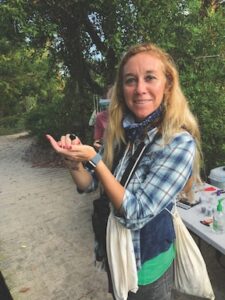 Y506 is an endangered Piping Plover chick who is gearing up to make the 1,000-mile journey back to his home in Sleeping Bear Dunes near Lake Michigan. While he’s just one of hundreds of shorebirds that Pettinelli works tirelessly to protect, track, and educate people about, he’s the main focus of her upcoming documentary, “Trembling Times.”
The short film, which is being produced by Marion Bull of Leland Creative, will document Y506’s journey from Folly Beach to Michigan where he’ll likely return for mating season this spring. How will Pettinelli know if he makes it? She’s tagging along.
Much like Anna Paquin’s character in Fly Away Home, Pettinelli will follow Y506’s migratory route in the hopes that they’ll meet once they both land in the Great Lakes State.
What will be a fairly painless flight for Pettinelli will be quite the journey for Y506 — but nothing he hasn’t done before.
Y506 hatched in Michigan last summer and flew all the way to Folly Beach, which is when Pettinelli says she first spotted him.
In addition to observing his auxiliary tag, a crucial tool that researchers use to protect endangered birds, she also noticed the stress he was under — primarily from humans and dogs who were disrupting his peace on the beach.
“His situation moved me profoundly,” Pettinelli says. “I began engaging with people kindly, aiming to share my knowledge and generate awareness.”
But, driven by her sense of duty and compassion for birds like Y506, Pettinelli decided to take further action.
“I wanted to share the complete story of the challenges he encounters just to survive a single year. His journey back to Michigan — finding a mate, reproducing, and then returning to Folly to repeat the cycle — deserves attention and admiration.”
If people are able to connect with the documentary, she says, then they might start to think about bird conservation in a whole new way and give endangered shorebirds like Y506 a fighting chance.
3 Simple Ways to Protect Our Feathered Friends
• Keep Our Beaches Clean – From getting tangled up in fishing lines to eating toxic items they can’t digest, birds face serious consequences when we leave trash behind. By picking up the litter we see — even if it’s not our own — we can help keep Folly’s bird population healthy and safe.
• Follow Local Leash Laws – Did you know that dog leash laws help protect more than just dogs and people? Areas that require leashes are often also in place to shield at-risk nesting grounds and preserve the nutrient-rich vegetative flats where shorebirds get many of their meals. Consider taking your pup to a designated off-leash area or purchasing a longer leash if they need to romp and stomp.
• Let ‘Em Rest – Some species of shorebirds travel for thousands of miles before taking a break. When they finally do, they need that time to rest and refuel. By walking around clusters of shorebirds instead of running through them a lá “The Notebook’s” famous “If you’re a bird, I’m a bird,” scene, we can help our friends store enough energy to make the next leg of their journey.
Spread Your Wings, Get Involved
Interested in learning more about how you can protect the birds in your backyard? Consider getting involved with one or more of the following organizations:
• Charleston Bird Club is an online community for bird lovers of the Lowcountry to help identify birds, post photos, share events, and communicate with other bird enthusiasts. Find them on Facebook to join in on the fun.
• Audubon South Carolina Shorebird Stewards educate the public about shorebird protection and conservation. Sign up to volunteer at www.sc.audubon.org/conservation/shorebird-stewards.
• Lowcountry Land Trusts is a conservation organization protecting land in South Carolina through easements, education, and community programs. Learn more at www.lowcountrylandtrust.org.
• Coastal Conservation League work with communities, businesses, and citizens to protect the natural environment of South Carolina’s coast for the benefit of all. To get involved visit www.coastalconservationleague.org.