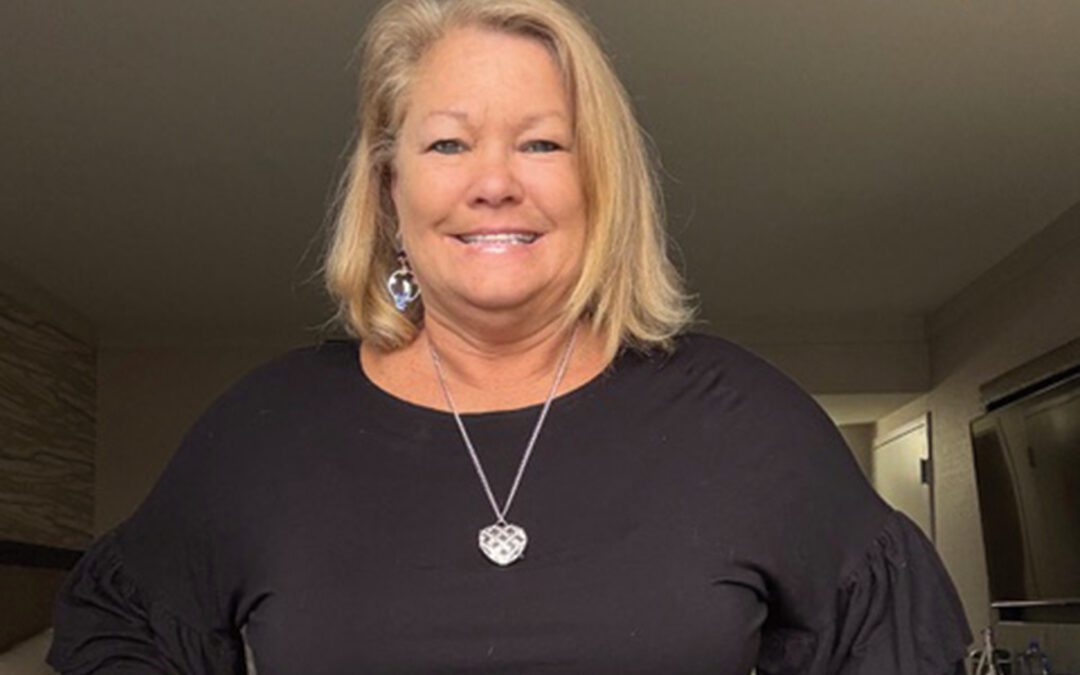
Folly Beach has always had a grip on Tara Glich
I first met Tara Girch during a Folly Beach festival. I remember watching a band and looking over and seeing a happy couple wearing Baltimore Ravens gear. Since I’m a Baltimore-area native myself, I wandered over and started a conversation about our commonality. After that, my wife and I would bump into them all over Folly. When I saw that Tara was interviewed by the Post & Courier about one of the recent drownings on the beach, I had a feeling she had something to say and Faces of Folly would be just the right outlet for it.
FOLLY CURRENT: Where were you born?
TARA GIRCH: I was born in San Antonio, Texas, but my heart quickly found its way to the Lowcountry. Our family moved to Charleston in 1970 when my dad took a position at the VA hospital down here. We eventually relocated to Baltimore in 1976 after he was recruited to work at Johns Hopkins. However, no matter where we lived, our connection to the South remained strong. The roots we planted during those early years shaped the rest of my life.
FC: How long have you been tied to Folly Beach?
TG: I have been tied to Folly Beach for 54 wonderful years. My parents bought our beloved beach house back in 1973, and it became the center of our family’s world. We would pack up the car with three children and a dog the very minute school let out in June. We stayed at the beach house all summer long, only packing up the day school resumed in September. After my mother passed away in June, the house now belongs to her three children, keeping her memory alive right here on the sand.
FC: What’s your favorite thing about Folly Beach?
TG: My absolute favorite thing about Folly Beach is the sound of the ocean. It has been the soundtrack to my life, providing a sense of peace and continuity through the decades. As I grew older and became a teacher, I spent every possible moment of my vacations listening to those waves. The ocean’s rhythm drew me back so strongly that Marty and I finally moved from Baltimore to Charleston in 2019. It is a comforting constant that always reminds me I am exactly where I belong.
FC: Share a story you are fond of about Folly Beach.
TG: Growing up in our beach house all summer provided endless adventures, but crabbing on the old rocks before Hurricane Hugo is my favorite memory. We would tie a little chicken neck to a piece of string and wait patiently for a tug. Pulling up those crabs felt like uncovering buried treasure every single time. Afterward, we would steam them, pick the meat, and proudly sell them to the tourists visiting the island. It was a simple, perfect summer routine that captured the magic of being a kid on Folly Beach.
FC: In your opinion, what’s the most important issue facing our community today?
TG: Currently, we have one of the highest rates of drowning in the history of Folly Beach, and it breaks my heart. On Easter Sunday, a beautiful day quickly changed course when a 33-year-old man drowned in the rough, 60-degree surf right behind my house!! It was incredibly traumatic to be a first-hand witness to this. When I saw the volume of help already surrounding him, I gave them room and pivoted to talk to the young boys on the sand in front of me who were puzzled how this could have happened so fast and right in the water they were swimming in too—my training as the owner of MarTar Swim School just kicked in and I helped them understand. After that, I realized that these kids and their parents don’t really understand how dangerous riptides and unpredictable currents can be. There isn’t enough education out there, and people need to realize that if they cannot swim, they absolutely must wear life jackets—even adults.
FC: If you were in charge, how would you fix it?
TG: I would set up life jacket loaner stations at every single public access point on the beach. They’re incredibly easy to build, and all we’d need is for folks in the community to donate the life jackets. It’s not a brand-new idea; if you look up the coast at Surfside Beach, they already have a successful loaner board right at their fishing pier. Down in Florida, life jacket trees are all over. Programs like Water Smart Collier have proven that having Coast Guard-approved jackets sitting right there on the sand saves lives!! The Sea Tow Foundation has helped put up over a thousand of these stations across the country. For more water-safety information and resources, I encourage everyone to visit www.stopdrowningnow.com. We don’t have to guess if this works—we just need to do it. It’s a simple, neighbor-helping-neighbor way to make sure everyone who visits our beach gets to go home safely.