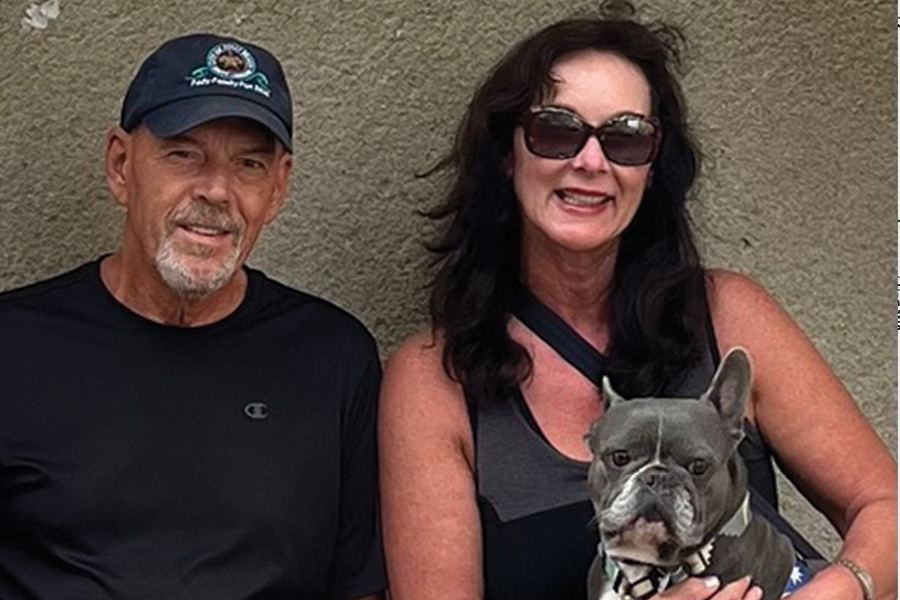
After a career supporting the military around the world, Deana Dockery found a home and a new purpose on Folly Beach
 My wife, Kim, met Deana Dockery at Yappy Hour, the unofficial daily 5:30 p.m. gathering at the dog park on Fifth Block East. It’s a wonderful way for dog lovers to meet their neighbors. One evening, a few regulars headed to the Pour House to see Folly’s own Shelby Means and Joel Timmons perform. So, Kim and I joined them. That was where I met Deana. She happily volunteered to be a Face of Folly, and I was glad she did.
FOLLY CURRENT: Where were you born and how long have you been tied to Folly Beach?
DEANA DOCKERY: I was born and raised in Sumter County, about 100 miles from Folly. I grew up in the country, surrounded by farmland, family, and neighbors who felt like family. It was the kind of place where word traveled fast, doors stayed unlocked, and visiting someone meant simply showing up.
FC: What is an experience that has had a lasting impact on who you are today?
DD: In 1986, Top Gun planted the seed for a career working as a civilian contractor for the Department of Defense. By 1992, A Few Good Men had strengthened that desire to serve without wearing a uniform. Less than two years later, at 22, I began my Department of Defense career at U.S. Naval Air Station Guantanamo Bay. I even shipped down a 1973 Karmann Ghia because its style reminded me of Charlie’s 1958 Porsche Speedster in Top Gun.
My work with the Department of Defense, and later as a contractor, allowed me to serve alongside those who protect our freedom and to experience the dangerous, depressing, and delightful parts of the world. The project-management skills I gained helped Bobby and me establish the Coastal Family Vacation Foundation five years ago. Through the CFVF South Carolina Cancer Respite Program, we bring families undergoing late-stage cancer treatment to Folly for a week away from medical routines, daily trauma, and financial stress. They can disconnect from cancer and reconnect with one another. To date, we have hosted 43 families.
FC: How did you end up in Folly Beach?
DD: Having grown up nearby, I had always known about Folly and visited often before Bobby and I bought our home here in 2012. We looked at coastal towns from Beaufort, North Carolina, to Tybee Island, Georgia, but nothing compared to Folly. After living on Oahu’s North Shore, Folly immediately reminded me of Haleiwa Town. The surfers, turtles, music, and casual vibe all drew me in and made Folly Beach feel like home.
FC: What’s your favorite thing about Folly Beach?
DD: Folly’s beauty and wildlife are extraordinary, but its people make it home. When a neighbor faces a challenge, this community rallies with remarkable generosity.
FC: In your opinion, what’s the most important issue facing Folly Beach today?
DD: Maintaining Folly’s understated, relaxed identity is the greatest challenge. Many of the island’s smaller bungalows are gone, few natives can afford to live here, and regional growth has changed both the pace and character of the area. Change is inevitable, but when local residents are displaced, a community can lose the qualities that made it special in the first place. I see that happening in towns around the world.
FC: If you were in charge, how would you fix it?
DD: There is no magical solution. Change is one of life’s constants. But perhaps we should all write down what we love about Folly’s culture—its customs, traditions, pace, and sense of community—and then actively support the people, businesses, and efforts that honor those values. We can welcome newcomers into Folly’s ways, teach them to our children, and make thoughtful choices that help preserve the character that brought us here.
Pat “Wiggy” Hiban interviews a different “Face of Folly” for this column each month. If you have an idea of someone you think Pat should chat with, please send suggestions to editor@follycurrent.com.