Folly Beach celebrates World Oceans Day with cleanup event on June 8
by Hanalei Potempa | Contributing Writer
Aclean, litter-free beach makes for not just a beautiful coastline, but a healthier one too. Folly Beach, like many coastal communities, plays an important role in the larger health of the ocean ecosystem. The ocean, which produces roughly half of the Earth’s oxygen, faces increasing pollution that threatens marine life, ecosystems, and even human health.
To recognize the importance of ocean conservation, the United Nations established World Oceans Day in 2008 as an annual global event encouraging coastal communities around the world to protect and restore ocean environments.
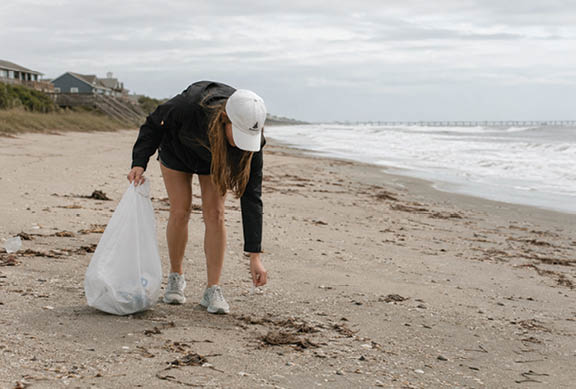
As part of that effort, Toby and Friends, in partnership with the South Carolina Aquarium, will host a Protect the Edge of America Toby & Friends World Oceans Day 2026 Beach Sweep on Monday, June 8. Volunteers will walk the beach and surrounding community collecting trash and pollutants that can ultimately make their way into local waterways and the ocean.
According to Vanessa Oltmann, FAB Litter Committee Chair and South Carolina Aquarium Conservation Assistant Lead Volunteer, pollution is far more interconnected than many people realize.
“When you put debris on the ground, even if you’re in the mountains, everything goes into the water,” Oltmann said. “Whether it goes through a storm drain or a spring, it eventually trickles down into creeks, rivers, and ultimately the ocean. Everything is connected.”
That connection also impacts humans directly. Marine animals often ingest plastics and other debris, which can eventually enter the human food chain.
“They’re finding that fish and other marine creatures are actually consuming plastics,” Oltmann said. “When we catch seafood, we as humans are unfortunately consuming some of that too. We’re also finding microplastics in our water. Keeping a healthy ocean helps keep us healthy as well.”
The South Carolina Aquarium will provide cleanup supplies for volunteers while emphasizing the sustainability message by utilizing reusable equipment as much as possible. The organization will also conduct litter data collection during the event, documenting the types and amounts of debris collected.
Linda Rowe, Lead Coordinator of Conservation at the South Carolina Aquarium, explained that the information gathered contributes to the Aquarium’s “Litter Journal,” an open-source dataset available through the South Carolina Aquarium Citizen Science app.
“We want people to understand how important it is to document litter, and, it really does help with solutions, because communities can’t make informed decisions if they don’t have the information about what is littering their communities,” Rowe says.
The data also aids conservation organizations in securing grants and funding for future initiatives.
Because of its location and ecosystem, Folly Beach serves as an especially important coastal environment. Local waterways flow directly into the ocean, creating critical habitats for marine life while also making the area vulnerable to pollution.
“It’s also a really critical area for sea turtle nesting and for shorebird nesting, so it’s an important location for wildlife and salt marsh animals and the ecology,” Rowe says. “It’s a really critical ecosystem, and it’s also a very popular place for the public beach and for the residents who live there, so it’s a spot where it’s really important that we are careful about how we impact the environment.”
Sea turtles are among the marine animals most affected by ocean debris, often becoming entangled in plastic or ingesting litter found in coastal waters.
Beyond the cleanup itself, organizers hope the event also serves as an educational opportunity. Conservation groups and local organizations will host informational tables throughout the event to encourage community involvement and awareness.
“Volunteers can learn about different organizations and what they’re doing to help with conservation,” Oltmann said. “I want everybody to see that we all work together.”
Organizations participating in the event include the South Carolina Department of Natural Resources, the Folly Beach Turtle Watch Program, the Folly Beach Wahines, and several additional local conservation groups focusing on conservation in different areas.
“Our goal is not only prevention, but raising awareness and eventually creating behavior change,” Rowe said. “We want to help people understand the connection between what we do in our daily lives and how it impacts our coastal ecosystems.”
Oltmann emphasizes that conservation begins with small everyday actions.
“We have one earth, this is it,” Oltmann says “All of these organizations come together to help make the world a better place and to teach people all about conservation in different areas.
She encouraged community members to remember that even small efforts matter.
“If everybody picks up one piece of trash, that makes a difference,” Oltmann said. “You as a person can make a difference. Everybody should be a steward of the Earth. We just need to learn to do better.”