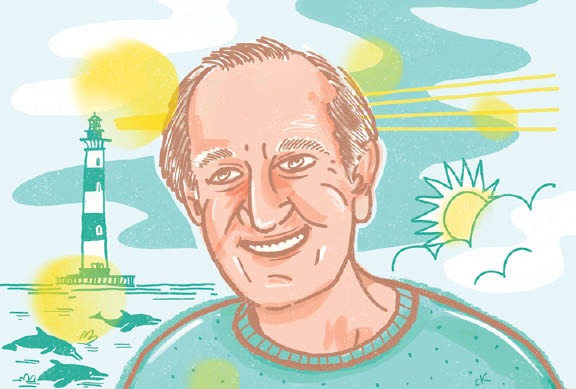
Former Mayor Richard Beck’s legacy shines on in Folly Beach’s protected shoreline, preserved history and his beloved lighthouse
by Regina Anderson | Special to The Current
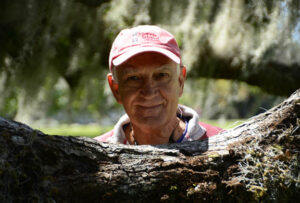
God knows I tried … those were the words at the bottom of Richard Beck’s instructions for his funeral (of course, he had a file. He always had a file). We don’t know about the Almighty but Folly Beach certainly knows he tried, and succeeded, in so many ways.
Dr. Richard Leander Beck was born in 1946 in Charleston and grew up a James Island boy, delivering the Evening Post and spending time in the water with his brothers and friends. After Erskine College he got his DMD from the Medical University of South Carolina and spent a long and fulfilling career in his James Island dental practice. He also served as Dental Director of Appalachia I and II and worked with Sea Island Comprehensive Healthcare in the 1970s. A gifted musician, Beck played in bands around South Carolina in his early years and after retirement, and played guitar with friends every week.
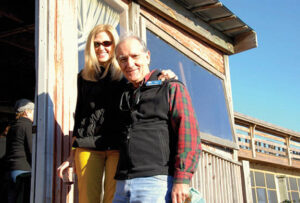 Beck always loved Folly Beach, putting that love into action full force in the 1980s. He served on Folly Beach City Council from1978 to 1982 and was elected Mayor in 1982.
This was a time of immense change and pressure on the island, including pressure to overdevelop a fragile barrier island that was eroding. By the 1980s there was barely any beach at high tide and the Atlantic Ocean was often swirling under houses.
“Things were really grim, you could hardly sell a house on Folly” according to former City Attorney Ben Peeples. “But Richard was one of the most tenacious and determined people I’ve ever met and he fought very difficult uphill battles, with good humor, to support this city.”
Building on the work of others concerned with beach erosion on the South Coast, it was Beck who was essential to convincing the U.S. Army Corps of Engineers of its responsibility for the erosion from the jetties and to renourish the beach periodically. He successfully brought together federal, state, and local governments to save this precious resource, vital not only for those lucky enough to live or visit here, but also for the state’s economy.
 If not for Beck, and those who rallied with him, the west end of Folly could have been a development of 540 pre-fab condos, a tennis court, and a private beach, not the accessible County Park it is today. He took the long-term view in his vision for the island he loved, in opposition to the short-term, always. And he always thought the residents should have the loudest voice in determining the direction of their city.
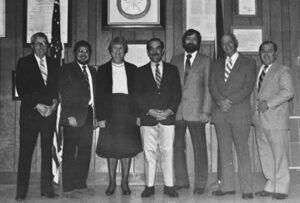
Beck’s time in public service was not without controversy, often heated. Disagreements over erosion, development, priorities, and the city government’s efficiency sometimes boiled over. One such situation led to then-mayor Regas Kennedy resigning, and almost the entire staff running the city resigned as well, including the police and fire departments.
“When that happened, Richard and I and others joined the fire and police departments and staffed city hall to keep it going until people could be hired to run the city” says former Council member John Manzi. “This was a time of great agitation on the island and residents were very concerned about development. City Council meetings went from being barely attended to full-house events.”
On Council Beck’s efforts to pass a height limit restriction ordinance in 1981 failed. The nine-story Holiday Inn, now the Tides, went up shortly after, although the original approval was for 2 five-story buildings. Similar efforts to slow high-density development also failed.
 Still, Beck never stopped battling against what he feared might have been a mini Myrtle Beach. It wasn’t easy. In a year-long effort to change the zoning of what was known as the Seabrook Property to single-family density, Beck and his allies lost almost every battle, in and outside the courtroom.
The original plan called for a 440-unit complex. But with perseverance and tenacity, and some clever parliamentary moves (think filibusters), the will of the residents, and a minority on Council, prevailed. Key to the limitation of high-density development was the 1983 binding referendum that allowed a sewer system to the commercial district, but in order to expand it, another binding referendum would have to be voted upon by the residents.
Among other efforts to stem overdevelopment in the mid-1980s, the city eventually succeeded in stopping a six-story condominium building where the fishing pier now stands, a 10-story condo development on the Sandbar property and three 12-story towers with an offshore swimming pool where the Oceanfront Villas now stands.
“Richard once came back from a meeting and said, ‘We need an Island plan.’ Two words that nobody here had put together!” remembers Peeples. “He asked us where we wanted Folly to be in 5 years,10 years. I’d say 95 percent of his discretionary time was devoted to making Folly a better place for all of us.”
 Worried that so much is often easily left out of recorded history, Beck chronicled the unique and pivotal machinations that formed the Folly we know today. Stories and images of his visions and his battles can be found in his book, Remaining Folly: A Sea Island’s Journey. He called the effort “a love letter to Folly Beach”.
And then there’s the lighthouse.
In 1999 the Charleston Light, what we now call the Morris Island Lighthouse, was being foreclosed upon. Beck and other like-minded folks got together to form Save the Light (STL), which has been working to save and shore up the lighthouse ever since. It was Beck who thought the State should own the lighthouse, and STL was able to work out a deal where the State owned the lighthouse, and its 20 acres of sand and water, while the non-profit STL would lease it for 99 years and take care of the ongoing efforts to save it.
“Richard knew, from his time as Mayor working with the Corps of Engineers, that the jetties were the cause of the erosion on Morris Island,” says Al Hitchcock, a founding member of STL. “So he was key in getting the first $3 million from the Corps to start saving the lighthouse.”
That deal was signed on Dec. 13, 2000, proclaiming it Morris Island Lighthouse Day by then Gov. Jim Hodges.
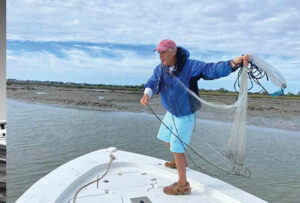
Beck was the longest-serving Founding Member of STL, and he loved to take visitors to view the lighthouse with his Creekdweller tours.
Some of Beck’s most recent contributions are with the Folly Beach Historical Society as a Board Member and as a co-curator of it’s first exhibit, “Surfing on the Edge.” He was also working on the next exhibit, “War Comes to Folly,” opening in early Fall. Beck left many of his papers to the Historical Society, which will catalog and archive them for future generations.
In the past few years, Beck loved to travel with his wife, Karen Lovelace, and loved to take photographs of everything, especially the flora and fauna around Folly and, of course, his beloved lighthouse.
He had recently completed his second walk on the “Camino de Santiago,” an ancient, transformative pilgrimage across Europe to the shrine of St. James in Santiago de Compostela, Spain. Beck’s first walk was in Portugal and just this past April in Spain.
He never tired of sharing his love of dolphins and loved to show them off on his tours, infecting his visitors with a respect for and awe of our local habitat.
Working with the Historical Society, he was constantly excited by new discoveries about Folly and new stories from strangers and from people he’d known for decades.
His curiosity was insatiable; his friendships deep and wide.
With all that he accomplished, however, his most treasured and deepest love was his “bride,” Karen, his daughter and stepchildren, grandchildren, and one great-grandchild. The well-known twinkle in his eye was never so bright as when he was talking about them or his brothers. That twinkle and Beck’s tireless efforts for the island he loved will be sorely missed but will continue on in Folly’s heart and soul.