 One of the first things a summer visitor to our island home notices (besides stepping into the permanent sauna of summer of course) is the smell. Salty, fresh, damp, and if you’re near the marsh perhaps a hint of rotten egg. Some find it off-putting; I think it smells like home!
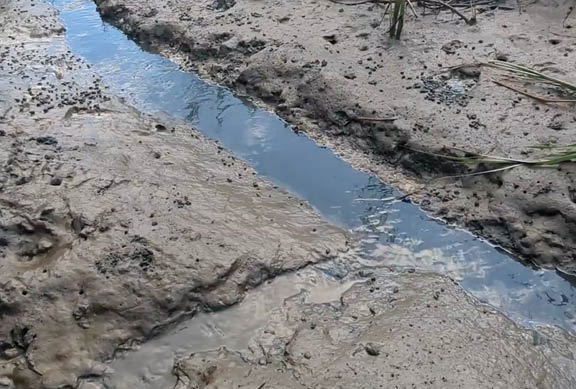
The culprit lies below our seemingly endless expanse of salt marsh and meandering waterways: pluff mud. Wander to the edge of a creek at low tide and you’ll see the brown silty mud that our ecosystem is built upon.
Pluff mud is primarily made of decaying marsh grass and other organic matter. When plants and animals die, whatever is left eventually sinks to the bottom where the decomposers (think FBI — fungi, bacteria, and insects!) get to work.
Because pluff mud is incredibly dense, oxygen is only found near the surface. In the absence of oxygen, anaerobic bacteria living in the mud release hydrogen sulfides that produce the classic rotten egg smell. Productivity in action.
I like to think of this nutrient rich mud as my personal spa retreat. The only downside? The residents. (And maybe the idea that it’s full of fish poo.) Pluff mud is teeming with life: worms threading through the ooze, fiddler crabs scurrying around their holes, snails leave winding trails across the surface, clams burrow deep, and oysters can be found lining the edges of the marsh grass.
As appealing as this sounds, we don’t recommend venturing out into the marsh or mud. Pluff mud texture ranges from silky and soupy to thick and claylike near the marsh. It’s a bit like quicksand and the unsuspecting person will sink several feet in softer areas! Sometimes the only way out is to lay down and “swim” your way into the water. Add sharp oysters to the mix, where even a small cut can become infected, and it’s best to enjoy the area from a distance.
Legend has it that pluff mud got its name from early planters who used it as a fertilizer in their fields. It was called “plough mud” and over time the name morphed to “pluff”. Personally, I like to think it’s because of the sound it makes trying to pull your foot out!
Next time you’re crossing the bridge at low tide and catch a whiff of egg, I hope it reminds you of the rich, wild, and diverse salt marsh ecosystem we are lucky to call home!
Found something and want to know more about it? Send a photo to saltmarshadventure@gmail.com for help identifying and a chance to be in the next Creature Feature!