
Coastal South Carolina is an integral part of the Atlantic Flyway
 When the topic of fall migration comes up many people first think about birds. I don’t mean the snowbird type escaping to the South, although I tried to be one of their ranks for many years. Coastal South Carolina is an integral part of the Atlantic Flyway and numerous species of migratory waterfowl use freshwater impoundments as a stopover. Geese cruise overhead in their telltale flying “V”. Estuarine species like cormorants and oystercatchers start appearing in greater numbers.
My favorite animals to watch as migration season gets going are the butterflies. As mornings become more crisp in September we start to see specks of orange fluttering across the creeks while we’re out on the water. The most famous butterfly? Monarchs! Monarchs make a truly impressive migration journey. The Eastern Monarch population makes its way from Canada to Central Mexico where they gather in enormous colonies to wait out Winter. In the Spring it takes several generations to complete the trip back North. Individuals lay eggs on milkweed plants, caterpillars transform into adults, and they continue on. Milkweed is a wonderful native plant to add to your garden to support butterflies, BUT it is toxic to animals and humans alike. Caterpillars are able to safely ingest the milkweed toxin. The bright orange and black wings serve as a warning sign to other animals: eat me and you’ll get sick!
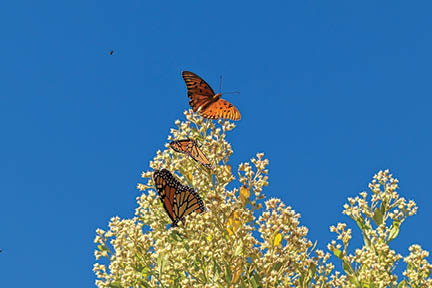
There are many ways organisms use color to protect themselves from predators. Arguably one of the most fascinating is called mimicry. Right now, the majority of orange butterflies you see drifting past are likely NOT monarchs! Gulf fritillaries have similar orange and black warning coloration, but unlike a harmless mimic, they have chemical defenses of their own thanks to the passionflower vines their caterpillars eat. When multiple toxic or distasteful species share similar warning coloration, it’s called Müllerian mimicry.
How do we tell the difference? Gulf fritillaries are slightly smaller butterflies. Their wings have a greater number of small black spots with nice silver spots on the underside of the wing. In flight, fritillaries have a more rapid (or “frantic”) wing rhythm while monarchs have a more graceful flap-flap-float cadence to their movement.
Haven’t seen many butterflies this year? Have a walk near the edges of marsh and look for groundsel bushes. These are 5-10ish feet tall on average and are covered in fluffy white seeds this time of year that give off the illusion of snow. Butterflies love to rest on them! We may not have the bountiful fall foliage of the mountains, but I like our subtle signs of the fall season: changing marsh grass, fluffy groundsel, and orange butterflies floating past!
Found something and want to know more about it? Send a photo to saltmarshadventure@gmail.com for help identifying and a chance to be in the next Creature Feature!